This is the first post in a series I planned to write since the beginning of this entrepreneurship journey. Over the next few posts I’m going back through the last twelve months, from May 2025 to now. My goal is not only to share the ups and downs of my new venture in the mobile app world, but also to explain our values and how we approach growth strategies while staying compliant with our ethics. The posts are voluntarily delayed by about a year, so that trade secrets aren’t exposed too quickly.
Let me start with a short summary of what happened. I left a good VP job at a great company to start a mental health/wellness mobile app studio. The original plan was to buy a live app, grow it, and reach 5K€ in monthly recurring revenue by May 2026. As of now (July 2026), we’re at about 2K€ MRR. That’s not where I expected to be. Since the entrepreneurial mindset is made of grit, this underachievement isn’t a confession — it’s just where things actually stand, and it’s the starting point for the rest of this series, not the end of it.
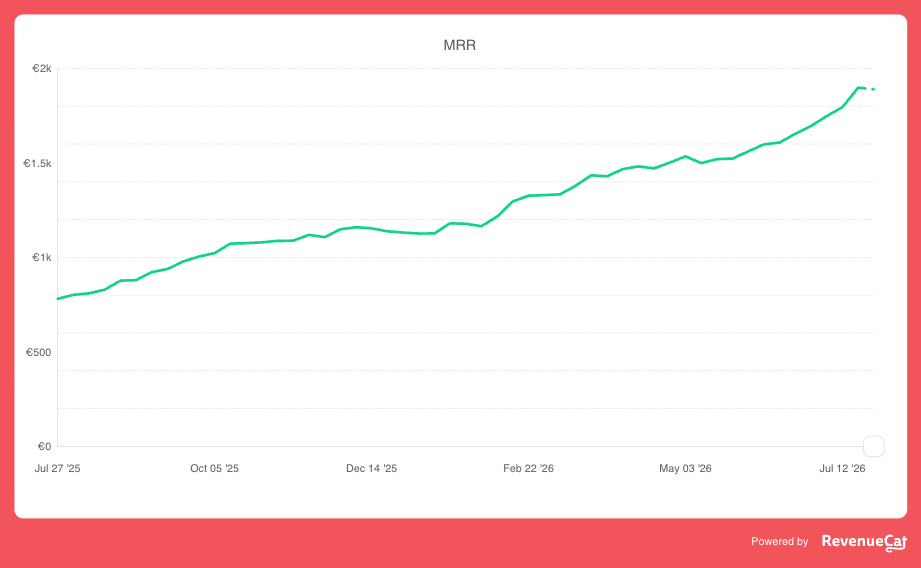
To understand how that number came to exist at all, the story has to start earlier than the acquisition itself (which occurred around November 2026). Let me tell you about the jump from a safe job into the unknown of entrepreneurship.
Leaving on Purpose
I spent five years as Head of Data at 52 Entertainment, a mobile gaming company living off evergreen casual games. I joined in 2020 and shared my decision to leave in 2025. During these five years, I built the data department there from scratch, and I had a seat on the internal board, alongside the CEO and a few other very smart people.
Nothing broke, and nobody pushed me out. What happened is quieter than that: at some point I noticed I’d shifted from what Paul Graham calls “founder mode” into “manager mode,” and manager mode — even done well — wasn’t giving me the adrenaline I actually wanted. I wanted risk and responsibility back, not just stewardship of something already built.
So I didn’t quit abruptly. I told the CEO directly, and we agreed on a phased exit: I’d find and hire my own replacement, transition for a few weeks, then leave. That’s what happened. I knew internally by around February 2025 that my departure would land around June. I’m really grateful for the opportunity my former CEO (Olivier Comte) gave me — without his trust, and that of others like Gabriel Fossorier, Aline Baudet, and Benoit Coupez, I wouldn’t be writing these lines today.
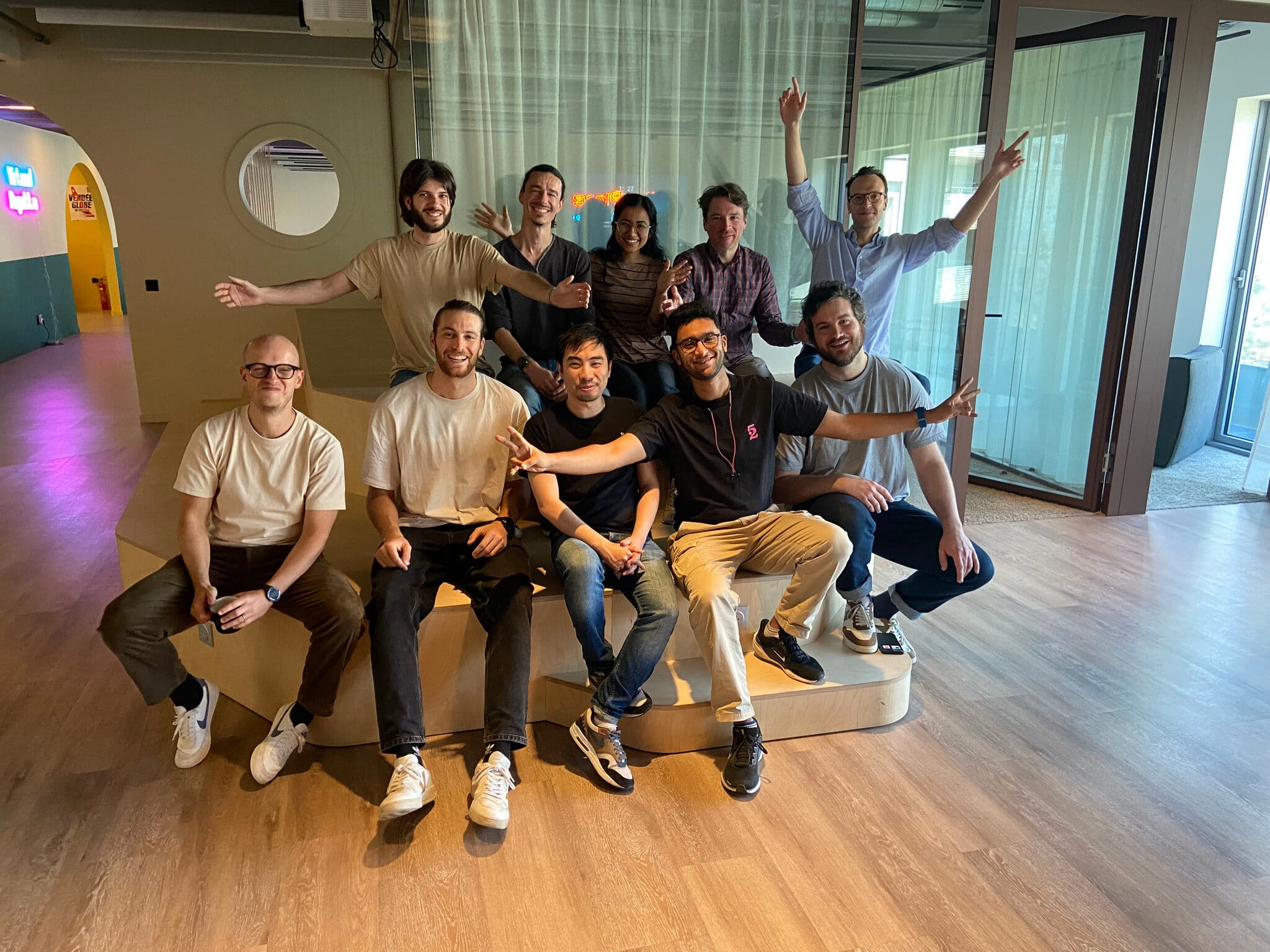
I learned so much during those years that I wouldn’t be doing justice to those teams if I didn’t write a few feedback stories of my own. Bear with me — I just need to find a new writing routine — but I’ll try to post on how to set up a data stack in gaming, on growing a remote-first team and building a culture around it, and on surviving in a scale-up acquiring one or two new studios a year.
Not Biodiversity, Not VC: Mental Health, Bootstrapped
The honest version of “what’s next” is that I didn’t have a clean answer waiting in a drawer when I first discussed this with Olivier. But I had time to iterate on ideas until June came around.
My current, long-standing interest was biodiversity and wildlife preservation. I looked at it seriously as a business and couldn’t find how I could bring a valuable addition to it — I couldn’t create a scalable, profitable project there. With my background in physics and digital, I was starting from too far away (despite a few angel investments in the field, my skills are spread too thin across the impact industries). So I set these topics aside rather than force them, and decided to focus on my 15-year-old strength: web and mobile.
So, in order to leave some room for impact, instead of nature impact, it could be social impact. I got interested in mental health issues lately, after reading “The Body Keeps the Score” by Bessel van der Kolk and looking into wellness apps. Psychology and psychiatry aren’t my fields — my background runs quantum physics, then SaaS, then mobile games — but it sits in a place I could defend: revenue-viable enough to build a real company on, and genuinely useful given how stressed everyone currently seems to be. Climate change, wars (👋 Putin, Netanyahu, Trump), the slow disappearance of mission-driven work — pick your reason. Addiction, stress, burnout, chronic disease, ADHD: the need isn’t exactly hidden. I wanted to build in that space, even without being the most qualified person to have the idea.
The other decision, alongside the space, was how to fund it. I chose to bootstrap, and that was deliberate. My reasoning: venture money front-loads growth and lets the real stress of running a company sit latent for years afterward. Bootstrapping does the opposite — you take most of the stress up front, while you’re still small enough to carry it, instead of holding it quietly for the company’s entire life. I’d rather have a hard first year than a hard decade. Another reason for it is the high valuation a mobile company can get if it scales right… I know many founders with zero or low VC money who sold and became multi-millionaires. Now they can get a yacht, or invest in philanthropy or in nature…
Buying Cash Flow Instead of Building It
Bootstrapped also meant slower revenue. I wasn’t going to spend a year building an app with no users and no revenue before finding out whether any of this worked. So the plan wasn’t build-then-hope. I planned to buy an active app first, to bank some cash flow from day one.
I set aside a total of €50,000 for the whole venture — legal setup, the acquisition itself, and initial marketing. Of that, about €25,000 was dedicated specifically to acquiring a live app over the summer of 2025, sourced through Acquire.com. The logic: an app that’s already generating revenue and has real users buys speed and removes a chunk of risk that building from nothing doesn’t. I’ll go through how that acquisition process actually worked — what I looked at, what I learned, what I got wrong — in the next post.
That’s the plan that produced the €5,000 MRR target by May 2026, and it’s also the plan that’s currently sitting at €2,000. The gap isn’t from a lack of effort — the metrics on the acquired app have kept climbing the whole time. But I’m still not reaching a net-positive ROAS, so I can’t scale the UA budget with peace of mind. That’s one frustration of bootstrapping: you can’t burn cash on paid acquisition just to move a number. So you get lower install volume, and learning — A/B tests and the like — is slower. Slower learning means slower iteration: onboarding variations, paywall designs, and so on. We’ve been steadily improving the ROAS of our existing Google Ads campaigns, but we’re currently at around 80% ROAS, which means scaling still isn’t possible.
Right now, we’re going through a major change on the live app: a rebrand. Hopefully this will give users a clearer sense of what the app is about, and bring CPIs down. That should be followed by our first Meta campaigns — but that’s a post for much further down the line in this blog. One other thing we’re launching next week is our first in-house app; more on that once it’s not a secret anymore.
Next up: June 2025, the first acquisition target I found, and why that deal fell apart before it went anywhere.